
Motorcycling is a popular way to get around Charleston and the surrounding area, but riders face risks that drivers of enclosed vehicles simply do not. With little more than protective gear standing between a rider and the pavement, even a relatively minor collision can produce serious injuries.
Riding season in the Charleston area brings a noticeable increase in motorcycle traffic on routes like Corridor G, MacCorkle Avenue, and the winding roads around the Kanawha River, and with it, a corresponding rise in preventable collisions caused by inattentive drivers.
After a crash, our Charleston motorcycle accident lawyers at Jan Dils, Attorneys at Law can help you determine what happened, who is responsible, and what compensation may be available. Whether you need a motorcycle accident attorney in Charleston after being struck by an inattentive driver or to deal with an insurance company disputing your claim, it helps to know the specific challenges motorcyclists face in these cases.
Why Trust Our Firm for Your Charleston Motorcycle Accident Case?
Motorcycle accident victims often face unfair challenges from insurers before the facts are even heard. Our team at Jan Dils, Attorneys at Law has spent over three decades building a reputation for tenacious, client-centered advocacy throughout West Virginia, including right here in Charleston. Our award-winning team, recognized among the National Trial Lawyers Top 100, knows how to counter these assumptions and build a case that reflects what really happened.
Free consultations and no fees unless we win mean you can focus on healing while we handle the fight.

What are Common Causes of Motorcycle Collisions?
Many motorcycle accidents in Charleston stem from the same driver behaviors that cause other types of crashes, though the consequences for riders tend to be far more severe. Frequent causes include:
- Drivers failing to see motorcycles in traffic or at intersections
- Left-turn collisions where a driver misjudges a motorcycle’s speed
- Distracted or inattentive driving
- Following too closely or sudden lane changes into a rider’s path
- Poor road maintenance, including potholes or loose gravel
- Defective motorcycle parts or equipment
Drivers have a legal duty to watch for and accommodate motorcyclists sharing the road, and a failure to do so can form the basis of a negligence claim. Left-turn collisions in particular tend to occur at intersections where a driver turning across oncoming traffic misjudges either the speed of an approaching motorcycle or fails to see it at all, a pattern that shows up repeatedly in crash investigations.
A related and frequently cited factor is inherent visibility challenges, as a driver may simply not register a motorcycle’s presence even when looking directly at it, due to the smaller visual profile a motorcycle presents compared to a car or truck. This phenomenon does not excuse a driver’s failure to yield or check properly before turning or changing lanes, but it does help explain why so many motorcycle collisions occur at intersections and during lane changes rather than in open roadway conditions.
Injuries Frequently Seen in Motorcycle Crashes
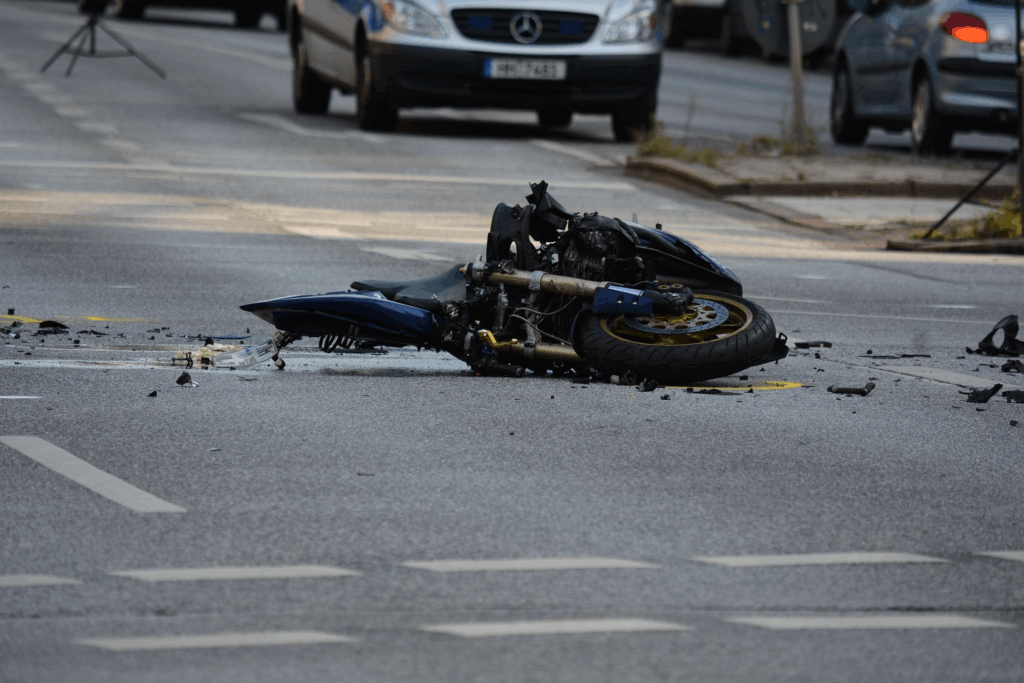
The physical toll of a motorcycle accident is often more severe than in a comparable car accident, given how little protection a rider has. Common injuries include:
- Traumatic brain injuries
- Road rash and severe abrasions
- Spinal cord injuries and paralysis
- Fractures, particularly to limbs and the pelvis
- Nerve damage
- Internal injuries
Because these injuries frequently require extensive medical treatment, surgery, and long-term rehabilitation, the financial impact of a motorcycle accident can be substantial even when the rider ultimately makes a full recovery.
Road rash injuries, while sometimes underestimated compared to broken bones, can require skin grafting and carry a meaningful risk of infection, adding to both the medical timeline and the total cost of treatment.
Does West Virginia Have Helmet and Safety Equipment Laws?
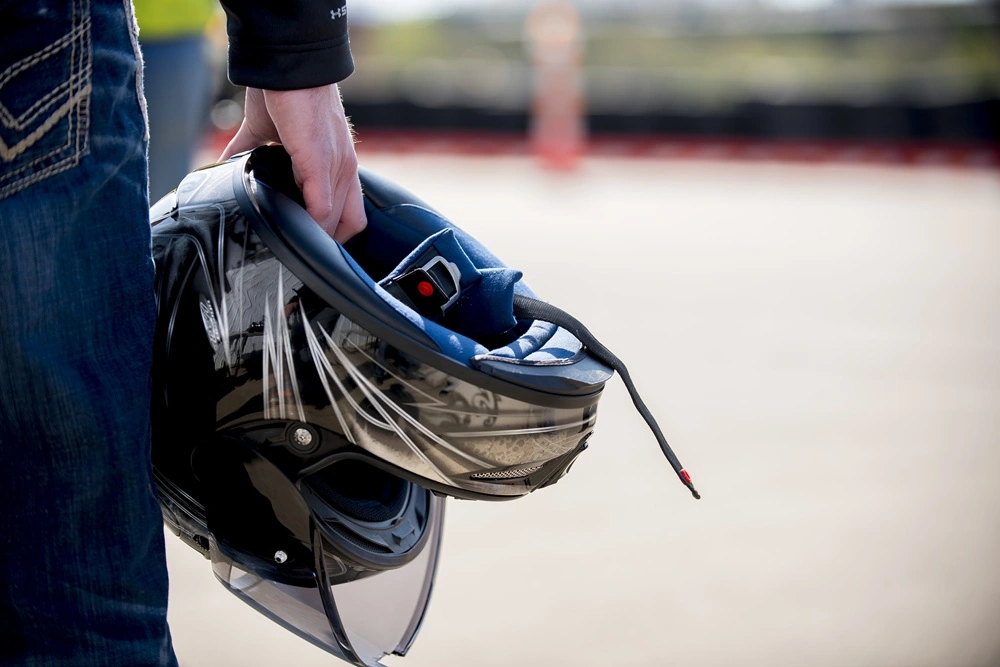
Under West Virginia Code §17C-15-44, the state maintains a universal helmet law that applies to both operators and passengers of any age, with no exemption for adult riders. Both operators and passengers are also required to wear eye protection, such as shatter-resistant eyeglasses, goggles, or a face shield meeting applicable safety standards, regardless of whether the motorcycle has a windshield.
An insurance company may attempt to argue that a rider’s injuries were made worse by a failure to comply with these requirements. However, West Virginia’s fault rules still allow an injured rider to pursue compensation from a negligent driver, and equipment compliance is only one factor among many that may be examined in evaluating a claim.
Motorcycles are also required to be equipped with a properly adjusted rearview mirror under state law, and while this requirement rarely becomes a central issue in a claim, it reflects the broader set of safety standards riders are expected to follow.
Pursuing Compensation After a Motorcycle Accident
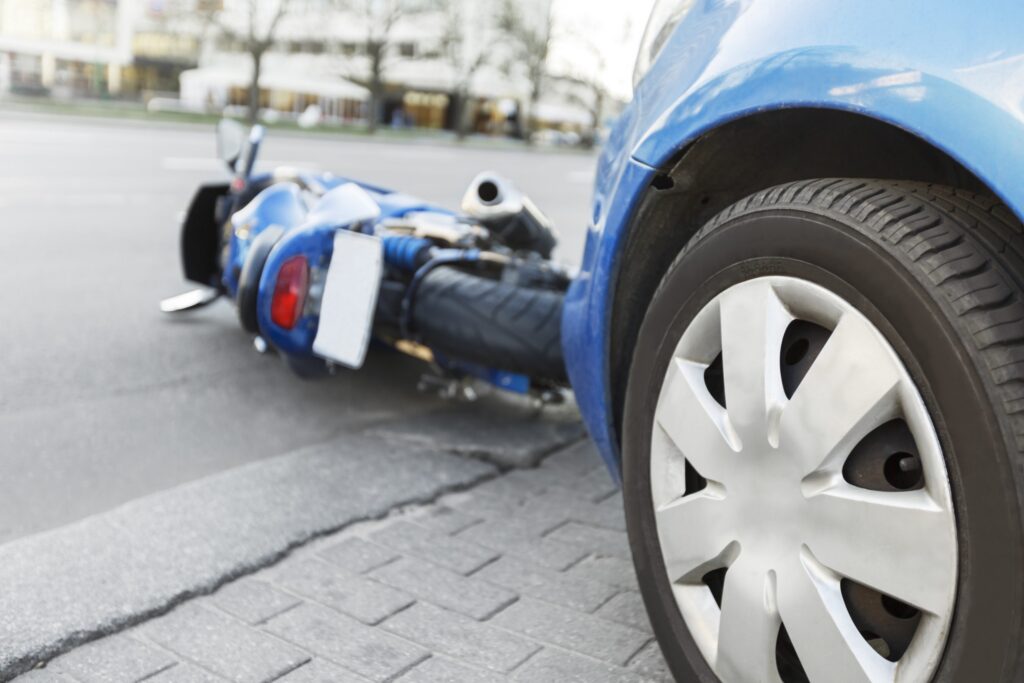
As with other personal injury claims, West Virginia Code §55-2-12(b) generally gives an injured motorcyclist two years from the date of the crash to file a lawsuit. West Virginia’s modified comparative fault rule under West Virginia Code §55-7-13a also applies, meaning a rider can recover compensation as long as their own share of fault does not exceed 50 percent, with any award reduced proportionally.
Compensation in a successful motorcycle accident claim can include:
- Medical expenses
- Lost income
- Rehabilitation costs
- Property damage to the motorcycle itself
- Non-economic losses such as pain, suffering, and reduced quality of life
Because motorcycle injuries often involve extended recovery periods or permanent limitations, calculating the full value of future losses is an important part of building a complete claim.
This can include the cost of adaptive equipment, ongoing physical therapy, or vocational retraining if a permanent injury prevents a return to a rider’s prior occupation. Damage to specialized gear, such as a helmet, riding jacket, or boots, is often overlooked in an initial claim, but can also be included as part of the property damage sought, particularly when that gear needs to be replaced due to the crash.
How Do You Address Bias Against Motorcyclists?
One added challenge in motorcycle accident claims is a tendency among some insurance adjusters, and even juries, to assume a rider was speeding, weaving, or otherwise reckless simply because they were on a motorcycle. Overcoming this bias often requires strong physical evidence, such as skid marks, vehicle damage patterns, and witness statements, to establish exactly how the crash occurred and who was actually at fault.
Accident reconstruction analysis can be particularly valuable in these cases, since it relies on physical evidence rather than assumptions about how motorcyclists typically ride, helping to present an objective account of what actually happened. It is important to have a lawyer who knows that motorcyclists are not inherently reckless individuals and can present their cases properly to insurers.
What Makes Motorcycle Cases More Complicated Than Car Accident Cases?
Beyond the bias some insurers and juries bring to motorcycle claims, these cases often involve additional complexity than car accidents, often involving lane positioning, following distance, and rider visibility. A driver may argue that a rider was lane splitting or riding unpredictably, even when the rider was operating well within the law, which makes clear documentation of the rider’s actual conduct important.
Weather, road surface conditions, and time of day can also play a larger role in motorcycle cases than in typical car accidents, since these factors affect a rider’s stability and a driver’s ability to see them in ways that matter less for enclosed vehicles. Working with a legal team familiar with these dynamics can help present an accurate account of the crash rather than one shaped by assumptions about motorcyclists in general.
Frequently Asked Questions
Does Not Wearing a Helmet Affect My Right to Compensation?
West Virginia requires helmets for all riders, but a helmet violation does not automatically prevent an injured rider from recovering compensation from a negligent driver. It may, however, become a factor that an insurance company raises during negotiations.
What if the Driver Who Hit Me Claims They Did Not See My Motorcycle?
A driver’s failure to see a motorcycle is not a valid excuse under the law. Drivers have an ongoing duty to watch for motorcyclists, and claiming inattention does not eliminate liability for a resulting crash.
Are Motorcycle Accident Claims Handled Differently Than Car Accident Claims?
The underlying legal principles, including the statute of limitations and comparative fault rules, are largely the same. However, motorcycle claims often require additional attention to overcome bias against riders and document the more severe injuries typically involved.
Can I Still File a Claim if I Was Riding a Borrowed Motorcycle?
Generally, yes. Fault is based on the conduct of the drivers involved in the crash, not necessarily on who owns the motorcycle, though insurance coverage details can vary depending on the specific policies involved.
What Should I Do if the Insurance Company Offers a Quick Settlement?
Early settlement offers are often calculated before the full extent of injuries and future medical needs are known. It is generally wise to have a complete picture of your damages before accepting any offer.
Does West Virginia Require Motorcycle Insurance?
Yes, motorcyclists in West Virginia are required to carry liability insurance, similar to drivers of passenger vehicles. If the at-fault driver in a crash lacks adequate coverage, a rider’s own uninsured or underinsured motorist coverage, if purchased, may become an important source of compensation.
Can Weather Conditions Affect Liability in a Motorcycle Crash?
Weather itself does not create liability, but a driver’s failure to adjust their behavior for wet, icy, or low-visibility conditions can support a negligence claim. Drivers are expected to account for road and weather conditions when determining a safe speed and following distance, particularly around more vulnerable road users like motorcyclists on the road.

Contact a Charleston Motorcycle Accident Attorney
Motorcyclists deserve the same consideration and legal protection as any other driver on the road, even when insurance companies and juries may be inclined to assume otherwise. Jan Dils, Attorneys at Law is ready to investigate your crash, push back against unfair assumptions, and pursue full compensation on your behalf. If you or a loved one was injured in a Charleston area motorcycle accident, contact us online to speak with a Charleston motorcycle accident lawyer.