


To Schedule an Appointment, Call Us Toll Free at 1.877.873.8208 or Email Us for a Prompt Response.
Motorcyclists enjoy the freedom of the open road, and for many riders, a motorcycle is more than a hobby. It may be a primary means of transportation. Unlike cars and trucks, however, motorcycles offer little in the way of a protective frame, which means riders and passengers are far more likely to suffer catastrophic injuries or death in a collision. If you or a loved one has been hurt in a crash, a West Virginia motorcycle accident lawyer at Jan Dils, Attorneys at Law can review your case and explain your legal options.
After a serious wreck, a motorcycle accident attorney can help you understand your rights, evaluate liability, and pursue the compensation you may be owed. A West Virginia motorcycle accident attorney familiar with the unique risks riders face can also anticipate the arguments an insurance company is likely to raise before they come up. Our accident attorneys focus on the needs of each client, understanding how devastating these crashes can be for injured riders and their families alike.
Motorcyclists face heightened risk any time they share the road with distracted, impaired, or reckless drivers. A motorcycle accident attorney West Virginia riders turn to after a crash often finds that the same handful of causes appear again and again. Common causes of motorcycle accidents include:
If unsafe road conditions, such as potholes, crumbling pavement, excessive debris, or missing signage, contribute to a rider’s injuries, the county or state government could bear civil liability. A motorcycle accident lawyer can investigate whether a government entity shares responsibility for the crash.
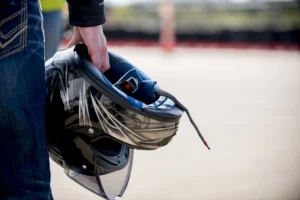
West Virginia has a universal helmet law. Every motorcycle operator and every passenger, regardless of age or riding experience, must wear a helmet that is securely fastened by a neck or chin strap and meets current ANSI, DOT, or Snell safety standards. Riders and passengers are also required to wear compliant eye protection, such as shatter-resistant safety glasses, goggles, or a face shield, any time they operate or ride on a motorcycle.
West Virginia does not have a law that names lane splitting specifically, but the state’s general rule requiring vehicles to stay within a single lane is understood to prohibit riding between rows of stopped or moving traffic. Motorcyclists who split lanes can be cited, and doing so can affect liability if a crash results.
Motorcycles must be equipped with turn signals, a rearview mirror, and handlebars positioned no higher than 15 inches above the seat. Daytime headlight use is required to improve visibility to car and truck drivers. Carrying a passenger requires a separate seat and footrests designed for that purpose, and passengers may not ride side-saddle. Sidecar passengers must wear a safety belt.
Motorcycle accident cases often begin with an initial consultation in which an attorney reviews:
Because motorcycle accidents frequently result in catastrophic injuries, early investigation is important to preserve evidence and understand how the collision happened.
Cases involving multiple vehicles can become especially complicated. Drivers may blame one another, insurance companies may dispute liability, and witnesses may provide conflicting accounts of the accident. Accident reconstruction experts, surveillance footage, and physical evidence from the scene often become important when determining fault.
Settlement negotiations usually begin once medical records, accident reports, and evidence of damages are gathered. Insurance companies often attempt to minimize payouts in motorcycle accident cases by arguing the rider assumed additional risk or contributed to the collision. Negotiations may continue for months depending on the severity of the injuries and the compensation being sought.
If a fair settlement cannot be reached, litigation allows both sides to present evidence, expert testimony, and arguments regarding liability and damages.

Since motorcyclists have so little physical protection, injuries in these collisions tend to be severe. Motorcycle accident lawyers who regularly handle these cases see the same categories of injury again and again, including:
Because motorcycle crash injuries are often catastrophic, it may be advisable for family members to contact a motorcycle accident attorney on an injured rider’s behalf if the rider is unable to do so. Motorcycle accident attorneys who understand the medical realities of road rash, degloving injuries, and orthopedic trauma can better document the full scope of a rider’s damages.
Economic damages cover the quantifiable financial losses tied to a crash, including emergency medical treatment, ambulance transportation, surgery, hospitalization, and ongoing rehabilitation. Riders who cannot return to work while recovering, or who suffer permanent disabilities affecting their future earning ability, may also recover lost income and diminished earning capacity.
Non-economic damages address the emotional and physical impact of the crash, including:
In fatal motorcycle accident cases, surviving family members may pursue wrongful death damages, including loss of companionship and the financial support the deceased would have provided.

West Virginia does not cap non-economic damages in a standard motorcycle accident case. The state’s damage caps are narrow and apply only in specific circumstances: claims against a state or local government entity are capped at $500,000, and medical malpractice claims are capped separately at $250,000, or $500,000 for wrongful death or certain severe injuries.
Neither of these caps applies to a typical claim against another driver following a motorcycle crash. A West Virginia motorcycle injury lawyer can explain which, if any, limitations might apply to the specific facts of your case.
West Virginia follows a modified comparative fault rule. An injured rider can still recover damages as long as they are found less than 50 percent at fault for the crash, with the total award reduced by their assigned percentage of responsibility. Failing to wear a required helmet or violating another safety statute does not automatically bar recovery, but insurers frequently raise it to argue that the rider shares some fault for the severity of the injuries.
West Virginia law gives injured motorcyclists two years from the date of the crash to file a personal injury lawsuit. Waiting too long to take legal action can also create other problems beyond the filing deadline. Evidence may disappear, surveillance footage could be erased, and witnesses may become difficult to locate as memories fade.
Some injured riders mistakenly believe ongoing insurance negotiations automatically extend the statute of limitations. In most situations, they do not, and insurance companies may continue discussions while the deadline quietly approaches.
Insurance companies often approach motorcycle claims differently than standard car accident claims, in part because of lingering bias against riders. Common defense strategies include arguing that the rider was speeding, lane splitting, or not wearing a helmet, or that the rider’s own maneuvering contributed to the crash. Adjusters may also attempt to minimize injuries by claiming they resulted from a pre-existing condition rather than the collision itself.
A motorcycle wreck lawyer who understands these tactics can gather crash reconstruction evidence, medical documentation, and witness testimony to counter these arguments and present a complete picture of how the crash actually occurred. Experienced motorcycle accident lawyers also know to request surveillance footage and event data early, since this evidence often disappears within days or weeks of a crash if no one requests that it be preserved.

Possibly. West Virginia requires all riders and passengers to wear a helmet, and not wearing one can be used as evidence that you contributed to the severity of your injuries. Under the state’s modified comparative fault rule, this could reduce your compensation, but it does not automatically prevent you from recovering damages unless your assigned share of fault reaches 50 percent or more.
Many injured riders search for a motorcycle accident attorney near me so they can meet with someone locally after a crash. Our firm maintains offices throughout West Virginia, making it possible for clients across the state to work directly with a local legal team while their case is being investigated and built.
This is one of the most common excuses insurance companies rely on after a motorcycle collision. WV motorcycle injury attorneys regularly counter this argument by showing that a driver’s failure to see a motorcyclist, whether due to distraction or simply not looking, does not excuse a failure to yield the right of way or otherwise obey traffic laws.
West Virginia’s statute of limitations generally gives injured riders two years from the date of the crash to file a lawsuit. Missing this deadline typically means losing the right to pursue compensation, so it is best to speak with a West Virginia motorcycle lawyer as soon as possible after a collision.
It helps to bring anything you have related to the crash, including photos of the scene and your motorcycle, the police report if one was filed, contact information for any witnesses, and records of medical treatment you have received so far. Motorcycle accident attorneys can request additional records and evidence once they are retained, but having these basics on hand helps your first meeting move efficiently.
If you or someone you love has been injured in a motorcycle crash, contact us at Jan Dils, Attorneys at Law today to speak with our West Virginia motorcycle accident lawyers about your case.
To Schedule an Appointment, Call Us Toll Free at 1.877.873.8208 or Email Us for a Prompt Response.
Jan Dils, Attorneys at Law