
Every commercial truck traveling through Logan County represents a significant safety risk to the smaller vehicles sharing the road with it. The mountainous terrain and winding secondary roads throughout Logan County present unique hazards for large commercial vehicles that are not always present in flatter, more urban areas.
Most truck operators drive with care, but mistakes still happen, and given the size and weight of these vehicles, even a small error behind the wheel can lead to devastating consequences. The legal claims that follow can only present additional challenges for injured victims.
A Logan truck accident attorney at Jan Dils, Attorneys at Law can help you evaluate what happened, identify every party who may share responsibility, and pursue the compensation you are owed. If you are looking for a commercial truck accident lawyer after a collision on a narrow mountain road or to deal with a trucking company’s insurer, the right choice can make a big difference in the outcome of your claim.
Why Choose Jan Dils, Attorneys at Law for Your Logan Truck Accident Case?
Trucking companies and their insurers show up to every case with teams of lawyers, and you deserve the same level of firepower on your side. Jan Dils, Attorneys at Law has grown into a firm of over 150 team members, all working from the same values of caring, collaboration, and client-centered focus that Jan built the firm on in 1994. Our Logan clients get access to that full network of experience when a commercial truck accident upends their life. Consultations are free, and you pay nothing unless we recover for you.
Who are Potential Defendants in a Logan County Trucking Accident?
An injured motorist seeking compensation for losses suffered in a commercial truck crash must identify the party or parties responsible. While many truck accidents result from driver error, the reality is that liability can extend well beyond the person behind the wheel. A commercial truck accident lawyer can help identify every potentially at-fault party and pursue accountability through a civil claim.
Truck Drivers
Truck drivers are frequently named as defendants in these cases, since driver error is a leading cause of commercial vehicle accidents. When a driver makes a mistake or violates traffic laws, such as changing lanes without checking blind spots or failing to yield the right of way, they may face civil liability for any resulting harm. Commercial drivers are also subject to federal trucking regulations that increase the duty of care they owe to other motorists on the road.
Trucking Companies
The employer of a negligent truck driver can also be held liable for damages caused indirectly through negligent hiring practices, inadequate driver training, or disregard of federal trucking regulations. A trucking company generally shares responsibility when a driver acting within the scope of employment causes a crash through negligence.
Third-Party Service Providers
Independent mechanics hired to perform repairs or routine maintenance can be held liable for a trucking accident caused by a faulty repair or a defective vehicle part that was not properly serviced.
Manufacturers
The manufacturers of commercial trucks or truck components may also face liability in some cases. A manufacturer that sells a defective part can be held accountable when that defect contributes to an otherwise preventable accident.
Government Agencies
State, local, and federal government entities are responsible for building and maintaining public roads, and a failure to do so safely can contribute to a serious crash. This can include failing to repair known hazards such as crumbling shoulders or inadequate guardrails on steep mountain grades, or designing a roadway in a way that is inherently unsafe for the size and weight of commercial trucks that regularly use it. Filing a claim against a government entity involves different procedural rules and shorter notice deadlines than a claim against a private party, which makes early legal guidance especially important in these situations.

Does West Virginia Limit Compensation in Truck Accident Cases?
A trucking company’s insurer will sometimes point to a change in West Virginia law as a reason to limit what it pays out. As of July 1, 2024, West Virginia Code §55-7-32 places a cap on the non-economic portion of a judgment, things like pain and suffering, when the claim is brought against the employer of a commercial vehicle driver. That cap currently sits at $5 million per occurrence and begins adjusting for inflation in 2026.
There are Exceptions to This Rule
What often gets left out of that conversation is how narrow this cap actually is in practice. Medical bills, lost wages, and future earning losses fall under economic damages and are never touched by it. More importantly, the cap disappears entirely if certain facts are present in the case.
A driver testing at .04 blood alcohol concentration or above, refusing a post-crash test, or being under the influence of a controlled substance all remove the limit. So does a driver who was behind on rest under federal hours-of-service rules, who was texting or otherwise distracted, or who showed a willful disregard for safety on the road.
An overloaded truck exceeding its rated gross vehicle weight also falls outside the cap’s protection, as does an employer that failed to carry at least $3 million in aggregate commercial coverage for the crash.
Given how many of these exceptions tend to surface once electronic logs, inspection records, and toxicology results are actually reviewed, it is worth having a full investigation completed before assuming the cap will apply to your case at all.
Federal Hours-of-Service Rules and Driver Fatigue
Fatigue is a recurring theme in commercial trucking crashes, which is why federal rules cap how long a driver can stay behind the wheel. A driver is limited to 11 hours of actual driving inside a 14-hour on-duty window, must take a 30-minute break during longer shifts, and cannot exceed 60 or 70 hours in a week without taking a 34-hour break to reset the clock.
These limits exist because a fatigued driver reacts more slowly and makes worse decisions, not unlike someone driving after a few drinks. When a driver’s electronic logs do not match up with fuel receipts, dispatch records, or witness accounts of when the trip actually began, that mismatch can become one of the more compelling pieces of evidence in a claim.
Common Types of Truck Crashes on Logan County Roads
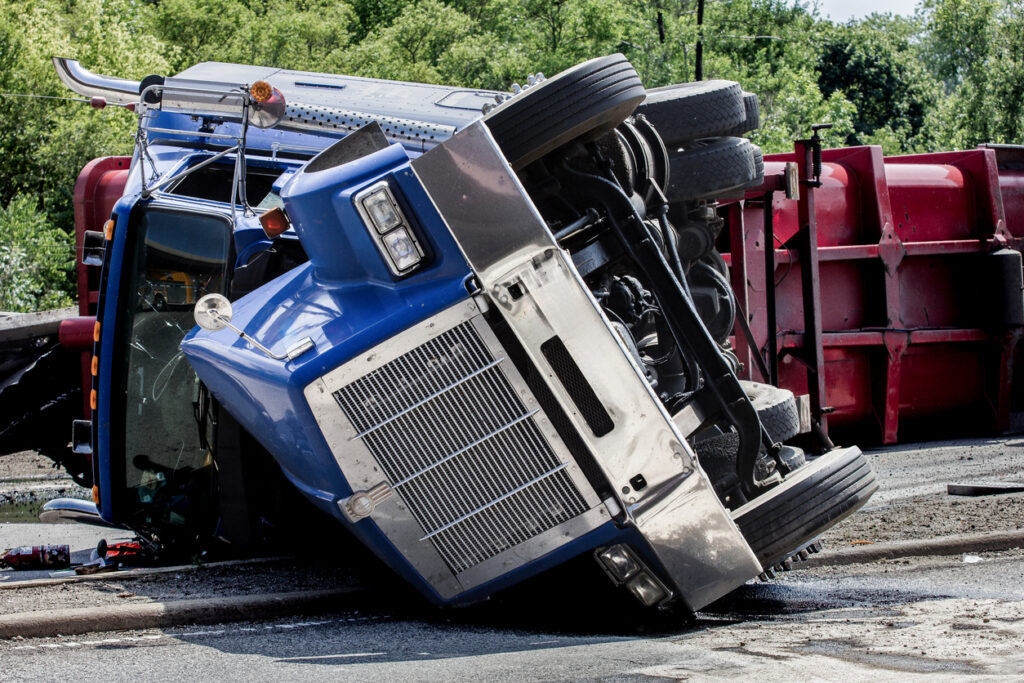
The mechanics of a commercial truck collision often affect both the severity of the injuries involved and the legal theories that apply to a claim. Some collisions that are common with commercial trucks include:
- Rollovers
- Jackknife crashes
- Underride or override collisions
- Cargo spills, including HAZMAT spills
- Runaway truck crashes
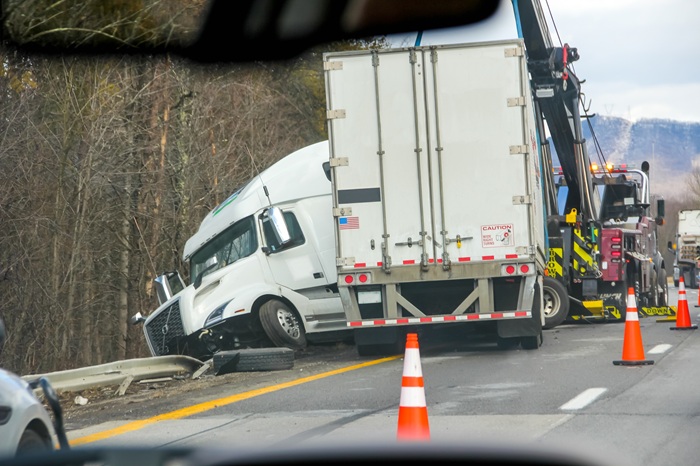
Which type of crash occurred directs an investigation toward the proper evidence, such as maintenance logs or loading documentation, most likely to reveal what actually went wrong.
Insurance Coverage in Commercial Trucking Cases
Commercial trucking policies typically have significantly higher coverage limits than standard auto insurance, often reaching into the millions of dollars given federal minimum coverage requirements for interstate carriers.
This higher coverage can make truck accident claims more complex to negotiate, since carriers and their insurers typically deploy experienced claims adjusters and defense counsel from the earliest stages of a case, in contrast to the more routine handling often seen in standard car accident claims.
What is the Deadline to File a Truck Crash Case?
Your time to file a trucking accident lawsuit in Logan County is not unlimited. Under West Virginia Code §55-2-12(b), the statute of limitations for most truck collision claims is two years from the date of the accident. Filing a commercial truck crash case after this deadline expires could permanently bar you from recovering any compensation. One of the ways a Logan County truck accident lawyer can help is by ensuring your lawsuit is filed within the time the law allows.

Preserving Key Evidence Quickly
Truck accident evidence can disappear faster than evidence in a typical car accident case. Electronic logging device data, dashcam footage, and certain maintenance records may only be retained for a limited period before a carrier’s systems automatically overwrite them. Sending a formal preservation request to the trucking company shortly after a crash can help ensure this evidence remains available for review, which is one reason prompt legal involvement matters so much in these cases. Weigh station records and roadside inspection reports can also provide valuable insight into a truck’s condition and a driver’s compliance history in the period leading up to the crash.
Frequently Asked Questions
Can the Trucking Company Be Held Liable, Not Just the Driver?
Yes. Depending on the circumstances, a motor carrier can be held responsible for negligent hiring, inadequate training, pressuring drivers to violate hours-of-service rules, or failing to properly maintain its fleet of vehicles.
My Injuries Were Caused by a Truck Registered in Another State. Does That Change Anything?
Not usually. A carrier based in Ohio, Virginia, or anywhere else that sends drivers through Logan County is generally still answerable in a West Virginia courtroom for a crash that happened here, though sorting out which court has jurisdiction can occasionally add a procedural wrinkle to the case.
Do Federal Trucking Rules Actually Help My State Court Case?
They can. A citation or violation under Federal Motor Carrier Safety Administration rules, whether it involves hours of service, vehicle inspection standards, or how cargo was secured, does not automatically win a case on its own, but it gives a jury a concrete, government-established benchmark for what the driver or company should have done.
How Do Attorneys Actually Put a Dollar Figure on a Truck Accident Claim?
There is no fixed formula. The number reflects the medical bills already paid, projected future treatment, wages lost and likely to be lost going forward, and the human cost of pain and reduced quality of life, all weighed against how clearly the evidence points to the trucking company’s fault.
What if the Cargo Itself Contributed to the Crash?
Improperly loaded or secured cargo can shift during transport or spill onto the roadway, contributing to a rollover or secondary collision. The company responsible for loading the truck, which is not always the same as the motor carrier or driver, may share liability in these situations.
How Long Does a Truck Accident Investigation Typically Take?
The timeline varies depending on the complexity of the crash and how many parties are potentially involved. Investigations that require reviewing electronic logging data, maintenance records, and cargo documentation from multiple companies generally take longer than a straightforward two-vehicle collision.

Reach Out to a Logan Truck Accident Attorney Today
Truck accidents can lead to debilitating and life-changing injuries with consequences that last for years. Jan Dils, Attorneys at Law is ready to investigate your crash, pursue every liable party, and fight for the maximum compensation you are owed. Contact us online today to speak with a Logan truck accident lawyer about your case.