
A mass tort is a set of individual lawsuits brought by many people who were harmed by the same product, drug, chemical, or corporate conduct. Each person keeps their own claim and their own damages, but the cases are grouped together so courts can handle shared questions, such as whether a product was defective or a chemical causes a particular disease, in one coordinated proceeding.
Jan Dils, Attorneys at Law, assists West Virginians in mass tort and toxic exposure claims involving dangerous drugs, defective medical devices, consumer products, and environmental contamination.
Find Out Whether Your Case Qualifies
Our team can review your injury and exposure history, explain your options, and help you understand the next steps.
Discuss Your CaseWhat Is Mass Tort Litigation?
Mass tort litigation is the process courts use to manage large numbers of similar personal injury or property damage claims against the same defendant or group of defendants. A “tort” is a civil wrong that causes harm, such as negligence or selling a defective product. When that wrong affects hundreds or thousands of people, the resulting lawsuits are called a mass tort.
The cases are coordinated rather than combined. Pretrial work that applies to everyone, such as exchanging company documents and testing the science, is handled once. Questions specific to each person, such as how long they were exposed and what injuries they developed, remain individual.

Mass Tort vs. Class Action
Mass torts and class actions both involve large groups of injured people, but they work differently.
- Class actions. One or a few representative plaintiffs sue on behalf of everyone in a defined group. Class members are generally bound by the outcome unless they opt out, and the recovery is typically divided according to a formula. Class actions fit cases where everyone’s harm is similar, such as a uniform overcharge.
- Mass torts. Each injured person files their own lawsuit and keeps control of their own claim. Recoveries depend on the individual’s injuries, medical history, and losses. Mass torts fit cases where the same product or exposure causes different injuries in different people.
Most personal injury cases involving drugs, medical devices, and toxic chemicals proceed as mass torts because the harm varies so much from one person to the next. One person may develop a treatable condition, while another faces cancer, permanent disability, or death.

How a Mass Tort Lawsuit Works
Mass tort cases follow a general sequence, though timelines vary from a couple of years to much longer.
Filing and Consolidation
Individual cases are filed in state or federal court. In federal court, the Judicial Panel on Multidistrict Litigation can transfer similar cases from around the country to a single judge under 28 U.S.C. § 1407. This is known as multidistrict litigation, or MDL. Each case keeps its separate identity, but discovery and pretrial rulings are coordinated.
Discovery and Scientific Review
Both sides exchange documents, take depositions of company employees, and retain experts. Plaintiffs’ attorneys look for evidence of what the manufacturer knew about the risks and when.
Bellwether Trials
Courts often select a small group of representative cases for early trials, called bellwether trials. The results do not decide the other cases, but they give both sides information about how juries respond to the evidence, which shapes settlement negotiations.
Settlement or Trial
Many mass torts resolve through a global settlement that sets up a claims process. Eligible plaintiffs submit documentation, and awards are typically assigned based on the type and severity of injury, the length of exposure, age, and other factors. Cases that do not settle may return to their original courts for individual trials.
Get Answers About Your Mass Tort Claim
If a medication, medical device, or toxic exposure causes you harm, Jan Dils can help you explore your legal options.
Schedule Your ConsultationWest Virginia’s Mass Litigation Panel
West Virginia has its own system for state court mass litigation. The Supreme Court of Appeals established the Mass Litigation Panel in 1996, and it was among the first of its kind in the country. The panel consists of seven active or senior-status circuit judges appointed by the Chief Justice, and its procedures are set out in West Virginia Trial Court Rule 26.
When a group of cases involving common questions of law or fact is pending in one or more circuit courts, the Chief Justice can refer them to the panel. Panel judges then manage the litigation together, issue consistent pretrial rulings, and often divide into presiding judges who handle the litigation and resolution judges who oversee mediation and settlement.
The panel has handled some of the state’s largest litigation, including asbestos personal injury cases, the claims arising from the July 2001 floods in southern West Virginia, the Marcellus Shale litigation, the Mingo County coal slurry litigation, water contamination cases, and the opioid litigation brought by the State and local governments.

Scientific Evidence in Mass Tort Litigation
Most mass torts are decided on causation, which has two parts. General causation asks whether the product or substance is capable of causing the injury at all. Specific causation asks whether it caused this person’s injury.
Proving causation usually requires expert testimony from epidemiologists, toxicologists, and treating physicians. Courts screen that testimony before it reaches a jury. Many mass torts are resolved or narrowed at this stage, before any trial.
At the individual level, medical records, pharmacy records, employment and residential history, and testing results are what connect a person to the exposure.

Toxic Exposure and Environmental Damage Claims
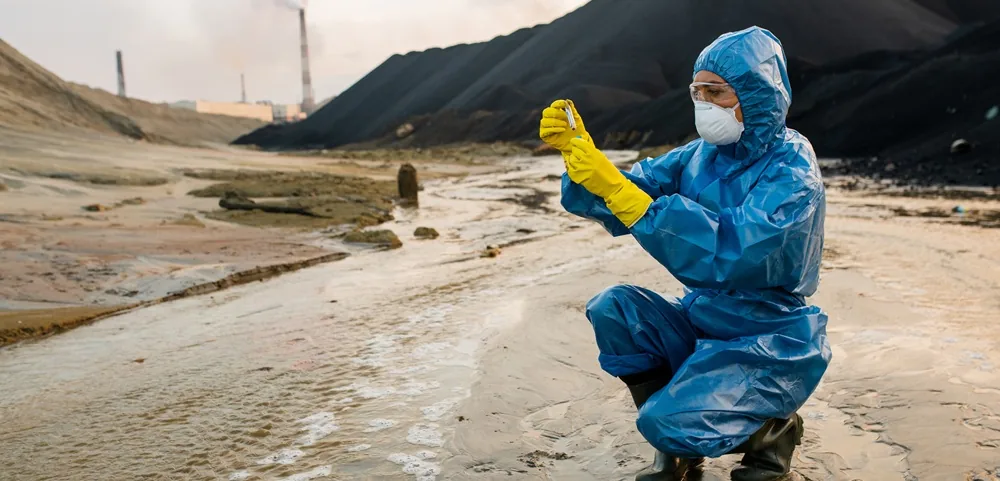
West Virginia’s history with heavy industry, chemical manufacturing, and energy production has made toxic exposure litigation familiar here. The Parkersburg area’s experience with C8, a PFAS chemical released from the Washington Works plant, produced one of the best-known environmental exposure cases in the country. The 2014 Elk River chemical spill disrupted drinking water for roughly 300,000 people in the Charleston area.
Toxic exposure and environmental claims can involve:
- Contaminated drinking water and groundwater
- PFAS and other industrial chemicals
- Asbestos exposure, including mesothelioma claims
- Herbicides and pesticides, such as paraquat
- Air pollution and emissions from industrial facilities
- Coal slurry, mine runoff, and gas drilling contamination
Environmental damage claims can include both personal injury and property damage. Property owners may seek compensation for loss of property value, cleanup costs, and loss of use when contamination affects their land or water supply.
Other Types of Mass Tort Cases
Beyond toxic exposure, mass torts commonly involve:
- Dangerous drugs with side effects that were not adequately disclosed
- Defective medical devices, such as hip implants, hernia mesh, and other surgical products
- Defective consumer products that injure many users in similar ways
- Large-scale accidents, such as industrial explosions or transportation disasters, that injure many people at once
Filing Deadlines for Mass Tort Claims
West Virginia generally allows two years to file a personal injury claim under W. Va. Code § 55-2-12. In exposure cases, the discovery rule often applies, which means the period may begin when a person knew or reasonably should have known of the injury and its likely cause, rather than on the date of exposure. Wrongful death claims follow their own two-year deadline. Mass tort settlements and MDL orders can also set their own deadlines for submitting claims or records, and missing them can bar recovery.

Why Choose Our Firm?
Our firm has helped thousands of people across West Virginia through personal injury and disability claims. When you work with us, we:
- Evaluate whether your injury and exposure history fit the criteria of an active mass tort
- Collect medical, pharmacy, employment, and residential records that prove exposure and injury
- Track court deadlines, claim forms, and settlement requirements
- Keep you informed about bellwether results, settlement offers, and your options
- Work with co-counsel and leadership teams in national litigation when that serves our clients
- Account for long-term care and family losses when a mass tort involves a catastrophic injury or a death in the family
We won’t take “no” for an answer when a manufacturer or insurer disputes a legitimate claim. Consultations are free, and we serve clients from offices in Parkersburg, Charleston, Huntington, Beckley, and Logan.
Frequently Asked Questions About Mass Torts
How Do I Know if My Injury Is Part of an Active Mass Tort?
A mass tort usually becomes active after lawsuits are filed and coordinated in an MDL or a state proceeding, such as West Virginia’s Mass Litigation Panel. Each litigation has its own criteria, which typically include the specific product or substance, the time period of use or exposure, and a qualifying diagnosis. An attorney can compare your medical records and exposure history against those criteria and tell you whether your situation fits an existing case or a newer investigation that has not been consolidated yet.
Can I Join a Mass Tort if I Live in West Virginia but the Case Is in Another State?
Often, yes. National mass torts are frequently consolidated in a federal MDL in another state, and West Virginia residents can usually file their cases there or have them transferred there. Your attorney handles the filing and court requirements, and you typically do not need to travel unless your case is selected for trial.
What Happens to My Claim if a Global Settlement Is Reached?
A global settlement usually creates a claims program with eligibility criteria and a schedule of awards based on injury type and severity. Each plaintiff decides whether to participate. Participation generally requires submitting records and signing a release, and medical liens from health insurers, Medicare, or Medicaid are typically resolved from the award before payment.
Speak With a West Virginia Mass Tort Attorney
Mass tort claims have deadlines and documentation requirements that start well before any settlement. The attorneys at Jan Dils, Attorneys at Law, can review your exposure and medical history and explain whether you may have a claim in an active litigation. Call (877) 526-3457 or contact us online to schedule a free consultation.
We Won't Take "NO" For An Answer®
At Jan Dils, Attorneys at Law, we focus our legal practice on helping individuals get the compensation and benefits they deserve.
Contact